Dahab
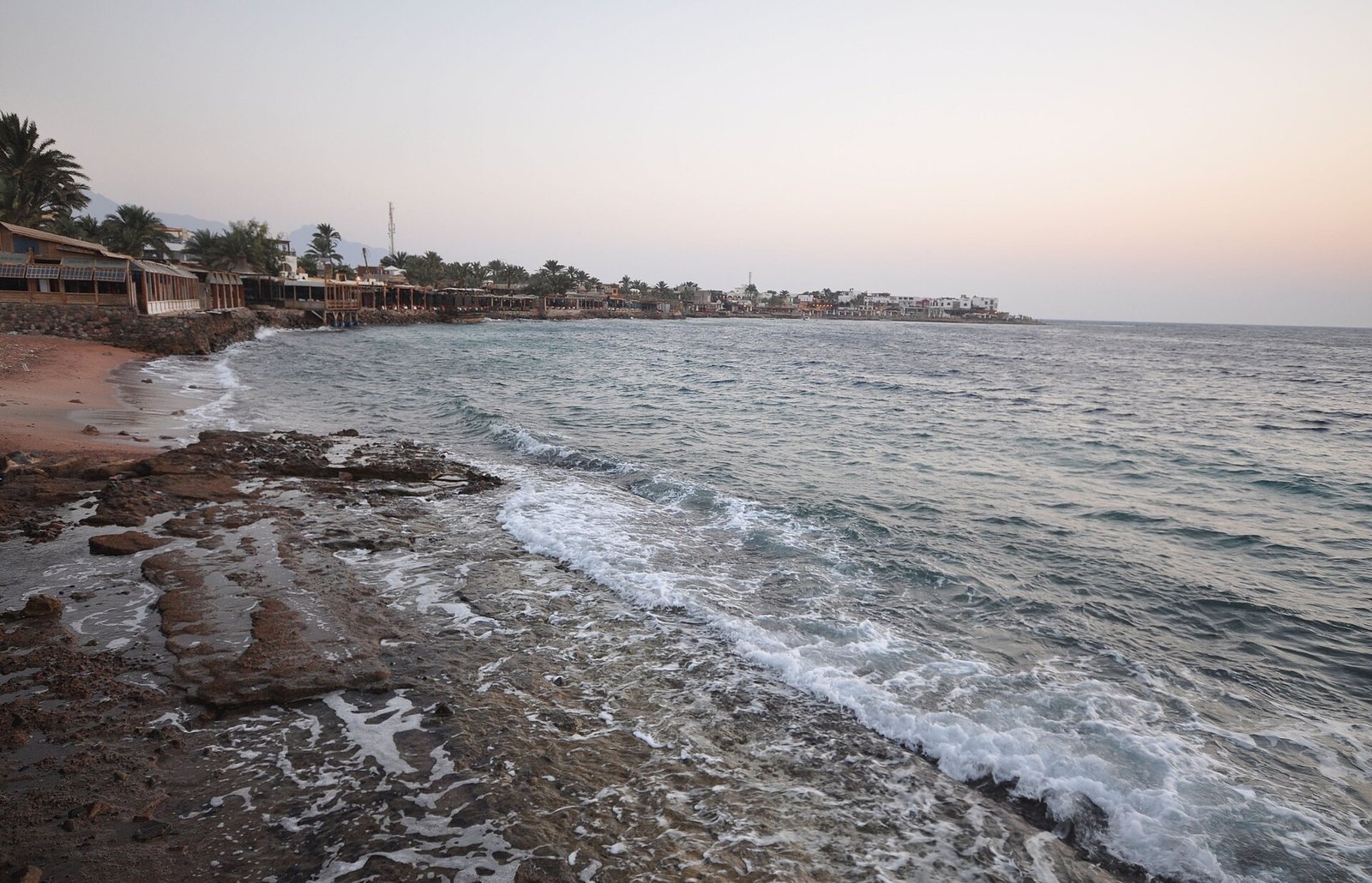
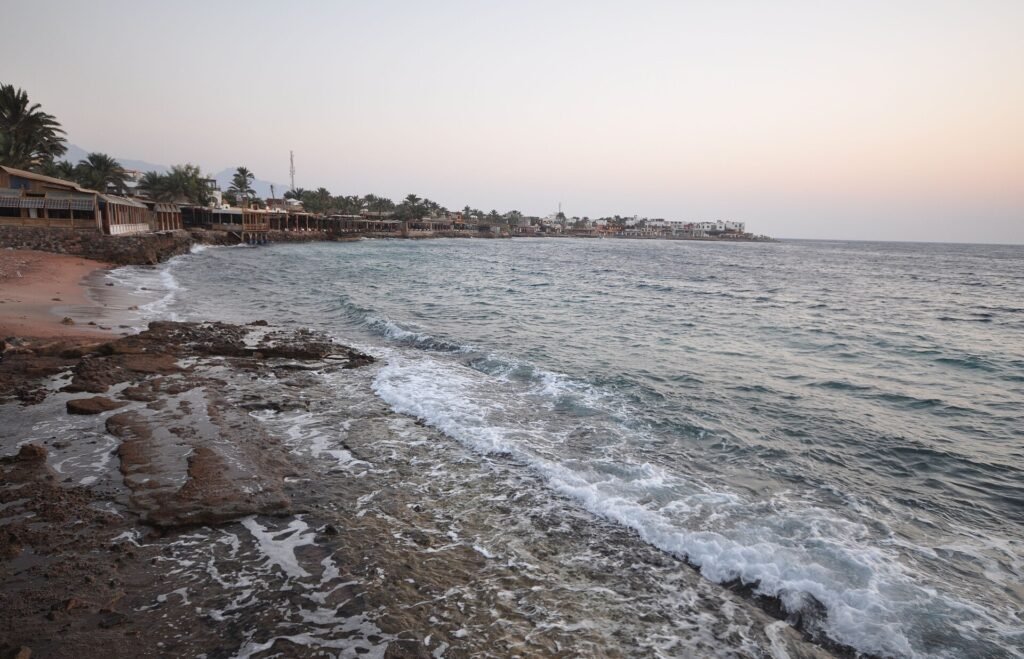
The Red Sea town where the reef starts at the end of the street.
Dahab is a low rise town on the Gulf of Aqaba coast of South Sinai, about 85 km and 90 minutes by road north of Sharm el Sheikh. It is built around shore diving, freediving and a walkable seafront rather than around large resort compounds. People come for the Blue Hole, the Canyon and the Lighthouse reef, and a lot of them stay longer than they planned.
What Dahab is, and why it holds people
Dahab sits on the Sinai side of the Gulf of Aqaba, with the mountains of Saudi Arabia visible across the water on a clear morning. It grew out of a Bedouin fishing village belonging to the Muzeina tribe, and the old quarter of Assalah still carries that shape. The name means gold in Arabic.
The town is small. You can walk the seafront from Eel Garden in the north to Mashraba in the south in under an hour. That walk holds most of the restaurants, dive centres and cafes anyone uses. Along the Assalah seafront there is no compound gate and no shuttle. That is the practical reason people extend their stay: the friction of a normal holiday is missing.
We run our own trips across Egypt from a base in Cairo. Dahab is the stop we most often recommend giving extra nights. It suits travellers who want water, mountains and time. It suits them less if they want nightlife or monuments.
The seafront and the contrast with the big resorts
The seafront is a pedestrian strip of low buildings, most of them two or three floors, running directly along the water. Restaurants put cushions and low tables at the edge of the stone, so you eat with your feet over the reef.
This is the opposite of the resort model. In the big Red Sea towns the hotel is the destination and the sea is an amenity inside it. In Dahab the town is the destination. The hotels are small properties that feed you breakfast and send you out into it.
Dahab divides into parts worth knowing before you book. Masbat, which holds the old Bedouin village of Assalah, is the busiest stretch of promenade. Mashraba, immediately south of it, is quieter and still walkable. Medina and the Laguna, in the southwest, hold the larger hotels and the flat water the wind schools use. The Lighthouse sits on the northern point of the bay, at the top end of Masbat. The dive schools cluster there, because the reef is a straight walk in from shore.
The trade off is honest. On the Assalah promenade there is no all inclusive wristband and no water park. From most seafront places the reef is a few steps from your breakfast table.
Diving and snorkelling in Dahab
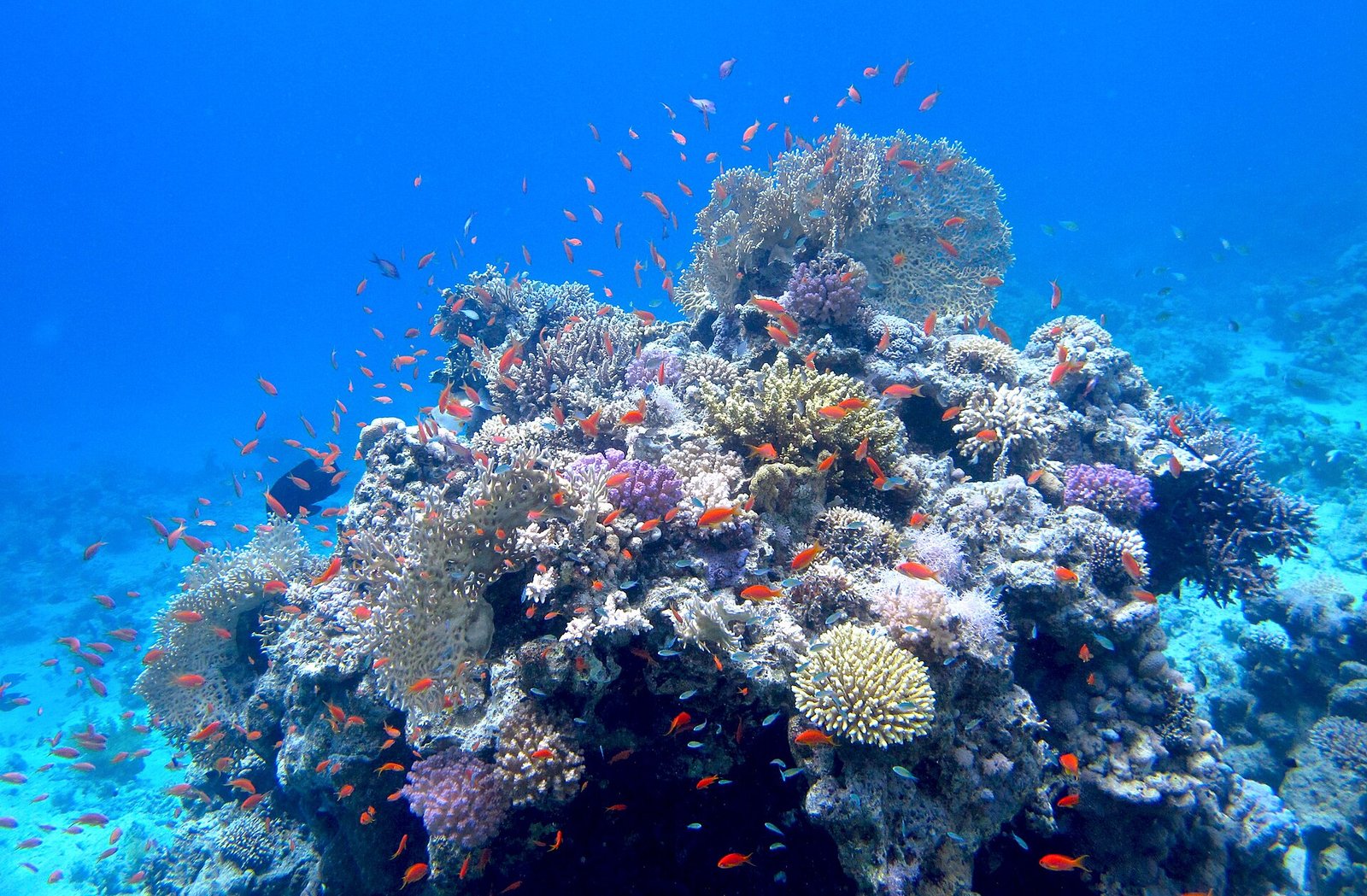
Almost all of the famous diving here is shore diving. You put your kit on at the back of a pickup, walk a few steps and get in. That removes the boat schedule and lets people dive two or three times a day. Visibility on the Gulf of Aqaba is generally very good. The wall drops away close to shore, so snorkellers see a lot without going far.
The Blue Hole and the Bells
The Blue Hole is a submarine sinkhole in the reef a short drive north of town, ringed by Bedouin cafes. For a snorkeller it is a bowl of deep blue water enclosed by shallow coral, easy to float over. Divers usually start at the Bells, a vertical chimney in the reef a little way north of the hole. They follow the wall south at moderate depth, then cross the shallow saddle into the hole. Done that way it is a wall dive with a spectacular finish.
The Canyon
The Canyon lies between town and the Blue Hole, near the mouth of Wadi Gnai. You enter over a sandy lagoon, cross a shallow coral garden and reach a narrow fissure that runs down into the rock. Divers with the right training drop inside it. Everyone else swims above the crack and looks down through shafts of light.
Lighthouse, Eel Garden and the town reefs
The Lighthouse reef, on the point at the northern end of the bay, takes most first dives, refreshers and night dives. Eel Garden, a little further north again, is a sand slope where colonies of garden eels stand upright and retract as you approach. South of town, the Islands is a maze of coral heads and sandy channels. It is the reef we send experienced divers to when they want the best one here. Gabr el Bint, further south, is reached by boat or by camel.
The Blue Hole's reputation, handled straight
The Blue Hole, a short drive north of Dahab, has a reputation as a dangerous dive site, and there are memorial plaques on the rocks above it. The shallow rim is not the danger. What makes the Blue Hole unusual is that extreme depth is available immediately. There is no gradual bottom to stop a diver who keeps going, and there is a well known temptation to go and look at the arch. Dived on the standard profile it behaves like an ordinary wall dive.
Most of the deaths are connected to one route, the arch. It is a tunnel through the outer reef wall, its top at about 56 m and its length roughly 27 m, far below recreational limits. Others were divers who kept going deeper down the wall than their training and gas allowed. There have also been freediving and surface drowning incidents. Narcosis at that depth removes the judgement needed to turn back.
- Dive the standard route. Enter at the Bells, a vertical chimney in the reef north of the Blue Hole, follow the wall south, then cross the shallow saddle into the hole. That profile stays inside recreational depth.
- Ignore the arch unless you are technical. It needs technical certification, mixed gas and a team who train together. If that is not you, it is not your dive.
- Choose the centre carefully. Ask about guide ratios, certification checks and how they brief the turn point.
- Snorkelling is a different activity. Snorkelling avoids the depth exposure behind most of the site's fatalities, but it is still open water over a drop of more than 100 m, with current on the seaward side. Wear a flotation vest, stay inside the coral rim, go with a guide, and do not breath hold dive on the line.
- State your real experience. Tell your guide how many dives you have logged. Nobody here is impressed by an inflated logbook.
Handled sensibly, and on the standard profile, the great majority of people dive and snorkel the Blue Hole without incident. We book clients into centres we have used ourselves, and we say no when a request does not match someone's certification.
Freediving and apnea in Dahab
Freediving is a large part of what Dahab is. Deep water close to shore, flat mornings and warm temperatures make it a year round base for apnea training, and one of the main freediving centres in the region. Freedive centres run depth lines off the town reefs and at the Blue Hole, and teach through the main international apnea systems. Which lines are running, and which schools are teaching, changes through the year. We confirm it when we plan your dates.
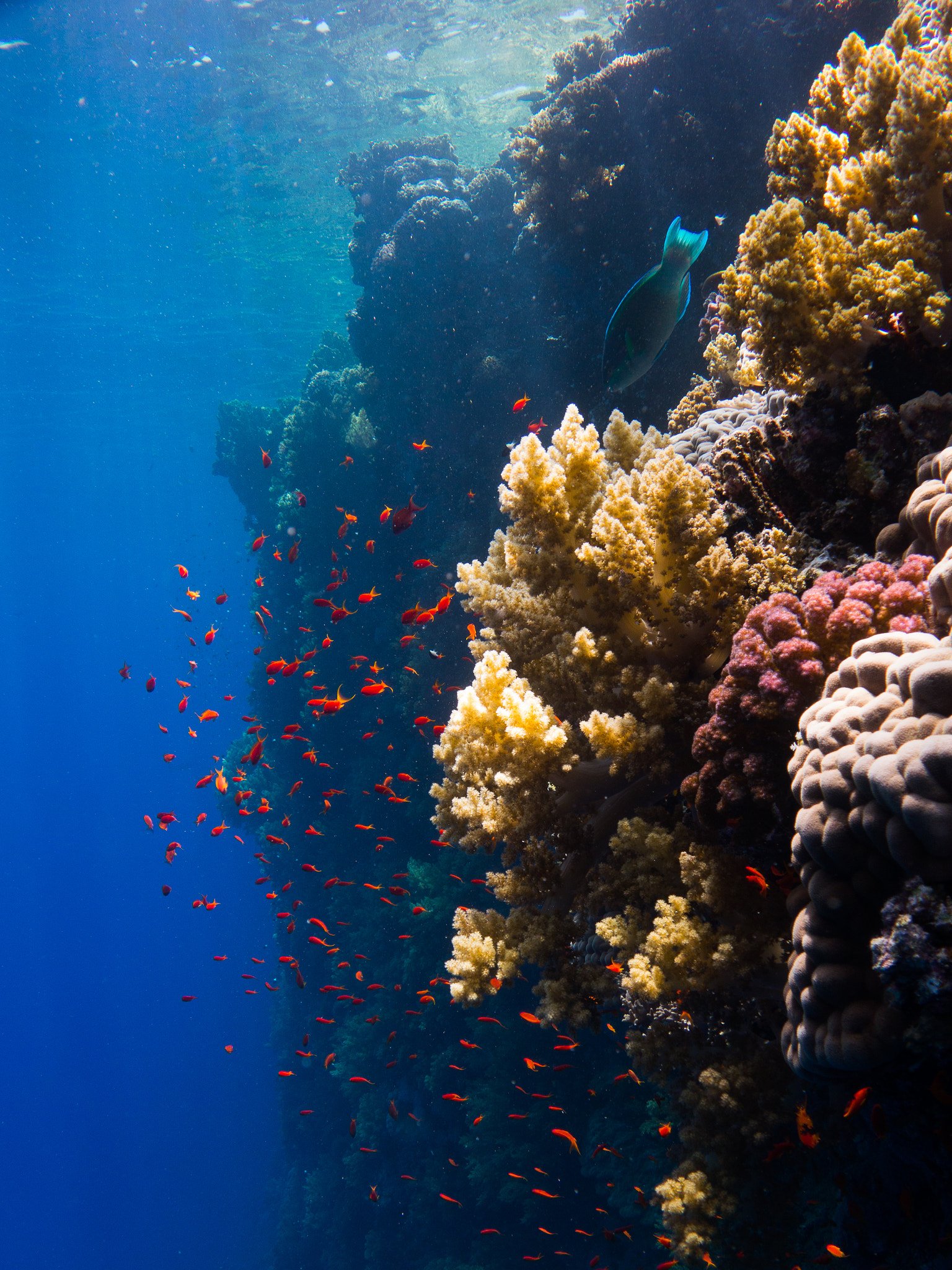
You need no background to start. A beginner course covers breathing, equalisation, safety and a first constant weight descent along a line with a buddy watching. Courses run in the morning, because the sea is calmest early and the wind builds over the lagoon in the afternoon. Plenty of people arrive for a short course and stay far longer than they planned.
For experienced freedivers the town is a training base rather than a holiday. Coaches, safety divers, rope setups, physiotherapy and yoga are all within walking distance. Tell us if you are coming to train, so we place you at the northern end near Eel Garden, where the long stay freedivers are.
Beyond the water: desert, wind and Mount Sinai
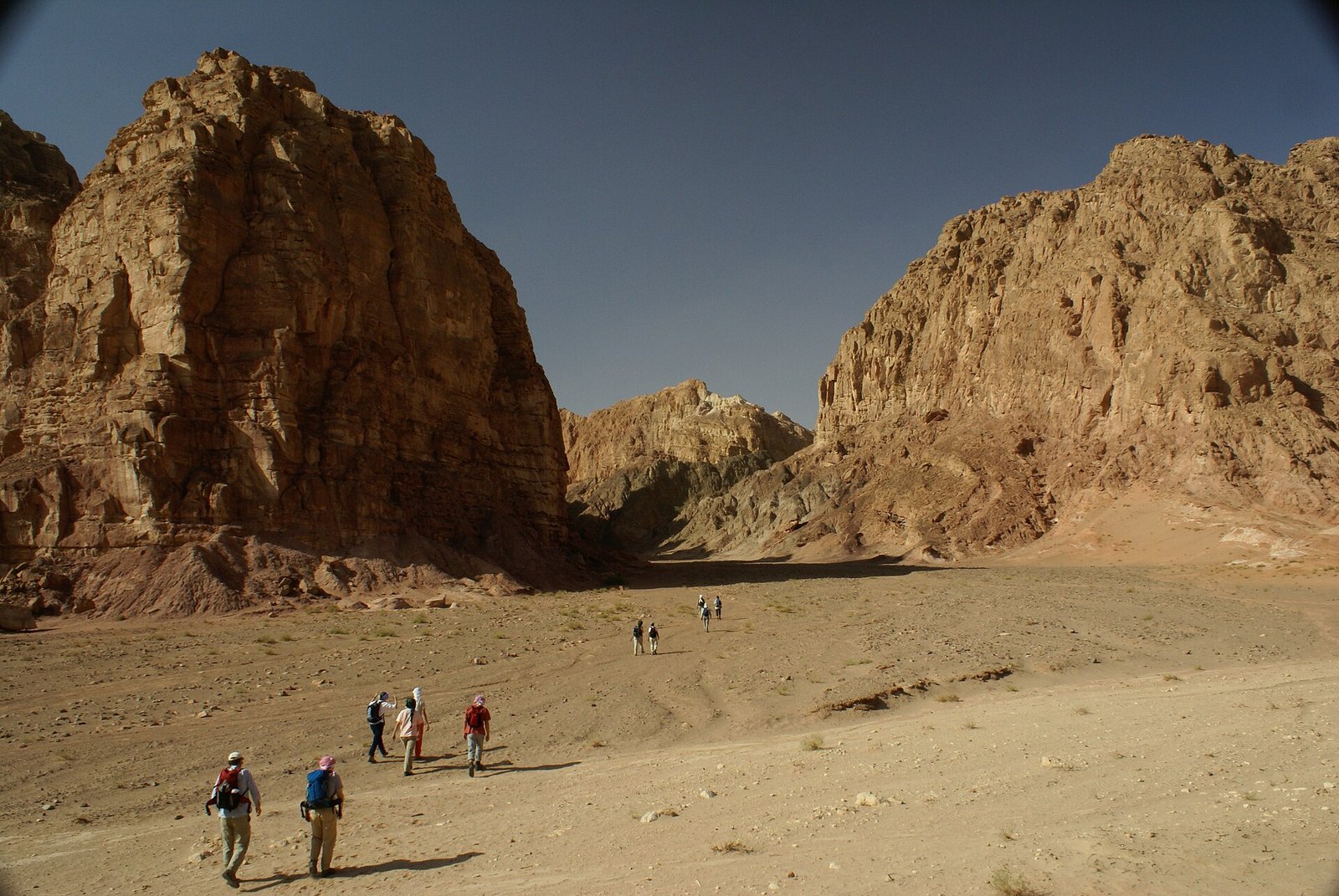
Behind Dahab the granite mountains of Sinai start immediately. Wadi Gnai and the open desert are minutes away, and Bedouin guides run half day and overnight trips. Ras Abu Galum, the protected coast north of the Blue Hole, has no road: you arrive on foot, by camel or by boat from the Blue Hole. The Blue Lagoon beyond it is reached by camel, by boat or by 4x4 over desert track, and it has a few simple camps. Sleeping out there is the night we most often build a Sinai trip around.
The lagoon at the southern end of town has reliable afternoon wind, which is why the kitesurfing and windsurfing schools sit there. It is flat and waist deep a long way out, so it forgives a first lesson.
Inland, Saint Catherine is a manageable drive. It is the base for the Mount Sinai sunrise climb, up either the camel path or the Steps of Repentance, when access to the mountain is open. We confirm current conditions before we schedule it. The Coloured Canyon, closer to Nuweiba, is the other classic desert day out. It all sits in the region covered by our Sinai Peninsula travel guide.
Getting to Dahab and when to go
Dahab has no airport. Almost everyone arrives through Sharm el Sheikh and drives north along the coast road past Nabq, about 85 km and 90 minutes in normal conditions. From Cairo there are domestic flights to Sharm el Sheikh, and we arrange those with the transfer. The overland route from Cairo passes under the Suez Canal at the Ahmed Hamdi tunnel. It runs down the west coast of Sinai and crosses to the Gulf of Aqaba. It is a long day but a striking one. We use private transfers rather than the public bus, because dive gear and checkpoints work better that way.
On timing, autumn is the sweet spot: warm water, comfortable air, calm mornings. Spring matches it on temperature but is windier, which the kitesurfers like and the freedivers do not. Winter days are mild and the nights cool, so divers move to thicker exposure suits. Summer is hot, the water is warmest and the town slows down in the afternoon. Our page on the best time to visit Egypt sets Dahab against the rest of the country.
Staying in Dahab: rooms, food and ground level detail
Where to stay along the seafront
Accommodation is mostly small: camps, guesthouses and modest hotels. Rooms on the promenade are convenient and noisier. Mashraba and the streets one row back are quieter, and still walkable. The northern end near Eel Garden is calmest, and it is where many long stay freedivers end up.
Where you sleep decides how the day runs, so we ask what you came for before we book. Divers do best within walking distance of their centre, because kit is carried on foot and pickups leave early. Families and non divers are happier towards the Laguna, away from the dive traffic.
Eating out is one of the pleasures here. Fresh fish, Egyptian mezze, Bedouin bread baked on a dome, and an unusually good spread of vegetarian cooking for a small town. Alcohol is served in some places, but Dahab is not a drinking town. Dress is relaxed by Egyptian standards. Swimwear belongs on the beach and at the pool, and covering shoulders and knees in the market is normal courtesy. This is a working Bedouin town as well as a dive destination.
Cash, health and what to bring
Cash matters more in Dahab than in the resort towns. Many camps, Bedouin cafes and desert trips work in cash only, so arrive with Egyptian pounds in hand. Our notes on changing money in Egypt cover how we advise clients to do it.
On health, stick to sealed bottled or filtered water rather than the tap, as you would anywhere in the country. Sinai sun is stronger than it feels because the sea breeze hides it, so use reef safe sunscreen and a rash vest. Dahab and Sharm el Sheikh both have hyperbaric facilities, and any policy you buy should explicitly include chamber treatment and evacuation. We confirm the chamber and evacuation arrangements that apply for your dates when we plan the trip. Our guidance on travel insurance for Egypt explains what to check.
Bring reef shoes, because most shore entries cross rock and coral rubble. Bring a light layer for the evening, since the desert cools quickly after sunset. A dry bag, a head torch for camp nights and any medicine you rely on are worth the space. The full list is on our page about what to pack for Egypt.
Dahab compared with Sharm el Sheikh and Hurghada
Dahab, Sharm el Sheikh and Hurghada sit on the same sea and work in completely different ways.
| What you care about | Dahab | Sharm el Sheikh | Hurghada |
|---|---|---|---|
| Town character | Small, low rise, walkable seafront | Resort bays, Naama Bay and Nabq | Coastal city with resort strips |
| How you dive | Mostly shore entries, few boats | Day boats to Ras Mohammed and Tiran | Day boats and liveaboards offshore |
| Signature sites | Blue Hole, Canyon, Islands, Eel Garden | Ras Mohammed, Thistlegorm, Tiran Strait | Giftun, Abu Nuhas wrecks |
| Freediving scene | Major international training base, year round depth lines | Limited | Limited |
| Families with young children | Works, but few resort facilities | Strong resort infrastructure | Strong resort infrastructure |
| Desert and mountains | On the doorstep, Saint Catherine close | Reachable on a longer drive | Eastern Desert, different landscape |
| Nile Valley add on | Needs a flight through Cairo or Sharm | Usually a flight via Cairo | The drive to Luxor is practical |
In short: choose Hurghada for a resort holiday with easy Luxor access, and see our list of excursions from Hurghada if that is you. Choose Sharm el Sheikh for boat diving on world famous sites with full resort comfort. Choose Dahab if you want the water to be part of daily life rather than an excursion.
How we put a Dahab trip together
We are a Cairo based operator running our own trips in Egypt, so Dahab is not a name we resell from a catalogue. We place you in the part of town that matches what you came for. We arrange the domestic flight and the transfer from Sharm el Sheikh. We put you with dive and freedive centres we know.
Most people pair Dahab with Saint Catherine, the Nile Valley temples, or Cairo at each end. We sequence it so the diving does not collide with a flight, because flying too soon after a dive is a real constraint.
Tell us your certification level, and whether anyone in the party does not dive. That answer decides where in town we put you. Send us your dates on WhatsApp and we will shape a custom Egypt tour around them.
Dahab questions we are asked most
Is Dahab worth visiting if you do not dive
How many days do you need in Dahab
Is the Blue Hole safe for snorkellers
Can complete beginners learn to dive in Dahab
How do you get from Sharm el Sheikh to Dahab
Do you need to be a strong swimmer for Dahab
Sinai, at Dahab's pace.
Tell us your dates, your certification level and what else you want to see in Egypt. We will build the Dahab part properly and fit the country around it.